
By Ophélie Pichon and Sophie Dumesny
December 19, 2025
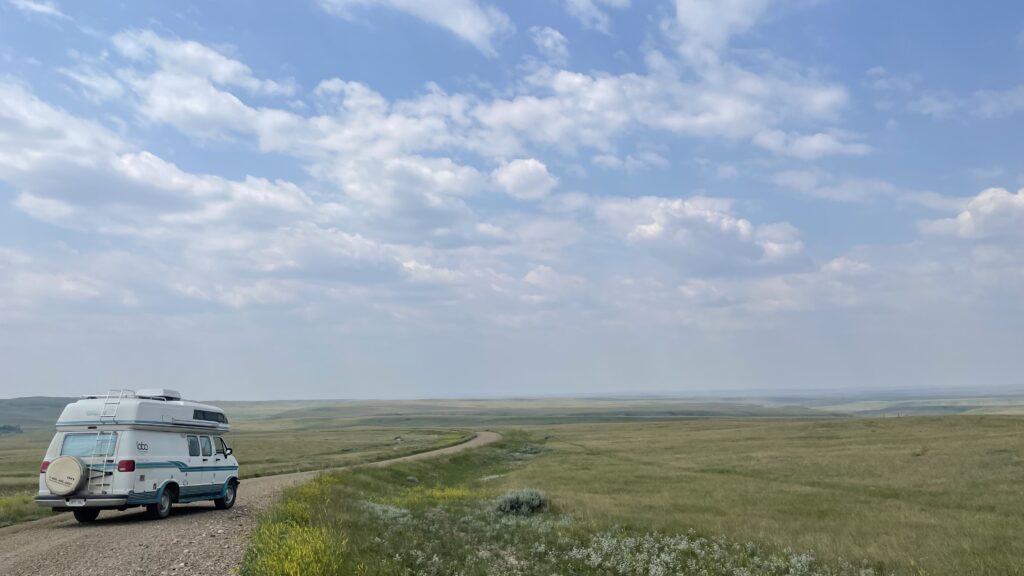
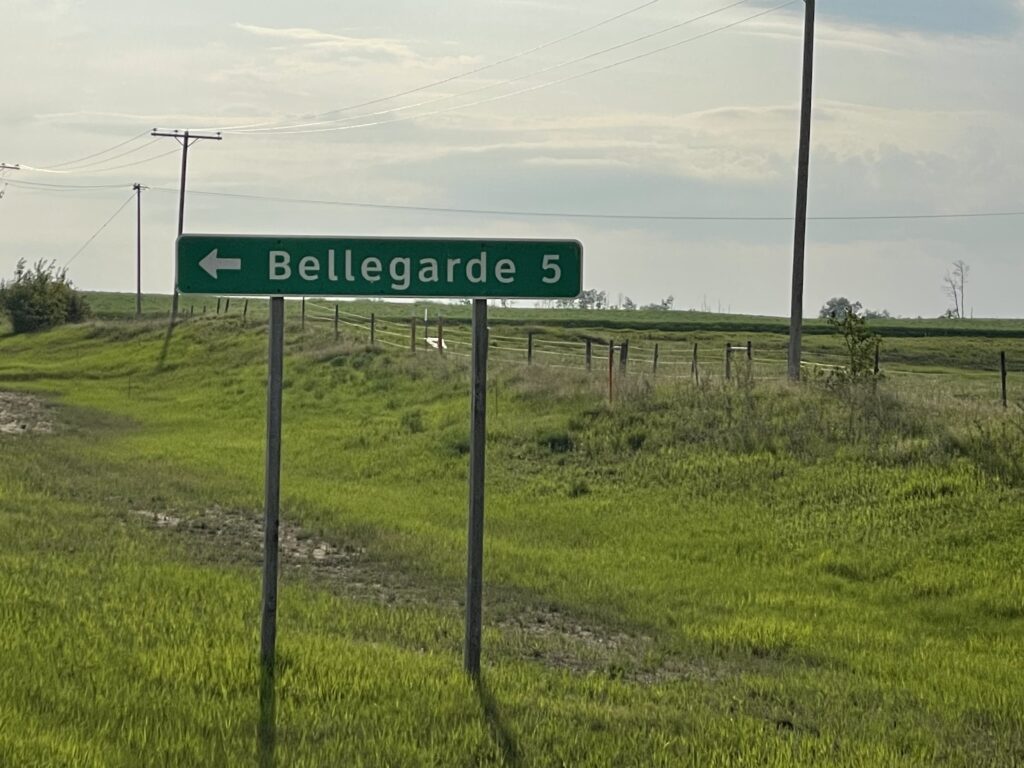
“The GPS reads: time to destination – 1 minute – École de Bellegarde, Saskatchewan. We exchange a surprised look: no town in sight. We knew the school would be isolated, but we expected to see it appear from afar, to see its building rising in the middle of these immense agricultural stretches we had been crossing for several hours.
Then a left turn. And there, a grove of trees. A green belt breaking with the landscapes we had traversed, and nestled within it, a few houses, then the school.
No fence surrounds it. A vast playground to explore. We already perceive the potential of the site as a video filming space for the students to whom we will give, starting tomorrow, the ‘Tourné-Montée’ workshop.
We are amazed to find ourselves here. Bellegarde is the fifth school visited since the start of the pan-Canadian Tournée-Montée, which began in Toronto, Ontario.”
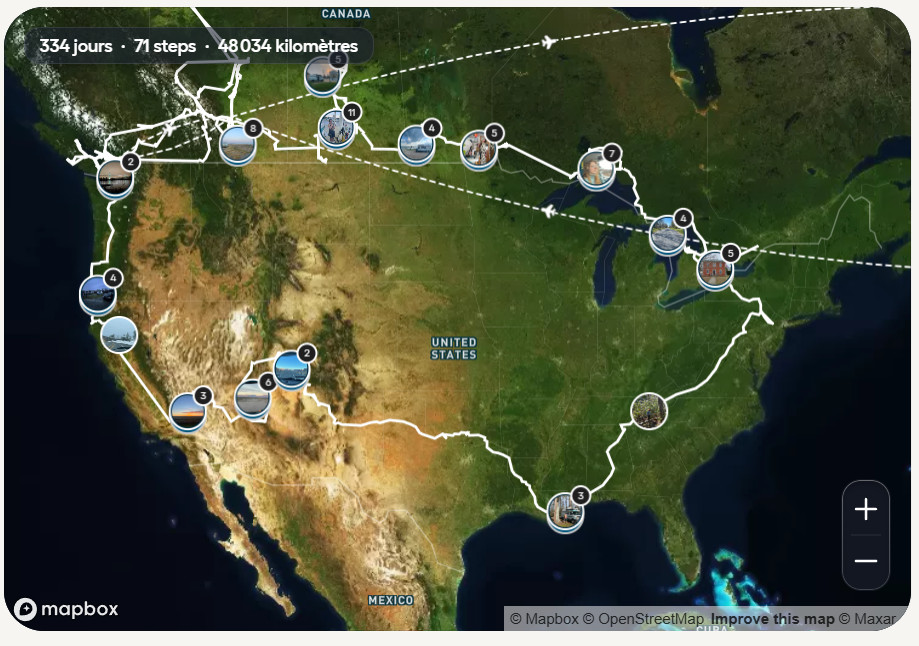
The pan-Canadian Tournée-Montée is a project that we led in 2023.
Us? Sophie Dumesny and Ophélie Pichon, two artists traveling in a converted van named Cactus. We set out to meet fourteen Francophone schools spread across four Canadian provinces, from Ontario to Vancouver Island. We offer students from grades 5 to 12 filmmaking workshops tailored to their grade level.
We provide two types of workshops adapted to the students. ‘Tourné-Montée,’ a technique for making a film without editing, and ‘Mobile Cinema,’ which explores the creative potential of the telephone to produce a short film. Each student leaves at the end of the day with a work they have scripted, filmed, and directed as a team.
Team creation is very important; we conclude the workshops with a collective screening of all the films produced. ‘Tournée-Montée’ and ‘Mobile Cinema’ encourage artistic and personal expression and the building of connections between students. We provide a structured framework, allowing them to have fun and create within constraints: making a short film in a one-day workshop, in their schools, using the objects and locations available around them.
By offering these workshops, we encourage them, through their imagination, to redefine the nature of the places they pass through daily. Thus, their perspective on their school evolves.
The workshops allow students to discover all the roles of filmmaking. From writing to searching for props, from acting to framing, everyone has a place in the creative process. Working as a team allows them to highlight their strengths and be supported by others if a step in the process is more difficult.
Because every student we meet arrives with their own life experience. Our role is to lead them to connect with their creativity. Whether they grew up near a large urban center like Ottawa, in more rural regions like Peace River, Alberta, or have recently arrived in Canada through various migratory paths, everyone has a unique life trajectory and a story to share.
We are artists, but also educators. For the students, we are figures other than their teachers. We transmit technical and artistic knowledge, accompanying them in the creation of their short film by creating an intermediate space of listening, adaptation, and learning, without evaluation or judgment. This encounter relies as much on their openness to our presence as on our ability to reach out to them. In this context, our spontaneity proved to be a precious ally.
What was built in each class, caught in the repetition of the tour, gradually exceeded the framework of the workshops. This tour, experienced in 2023, continues to nourish our way of thinking about creation and transmission today. In particular, it influenced our relationship with distances and the scale of the Canadian territory. It opened a reflection on the diversity of Francophone communities in contexts far from major centers.
By empowering students in a positive way, by trusting them with the care of the equipment, and by encouraging them in the feasibility of their ideas, we saw that this nourished their motivation to participate fully in the project. Telling children that their voice is precious, and that what they invent deserves to be heard, is for us a way of affirming an ethics of transmission based on trust and recognition.